
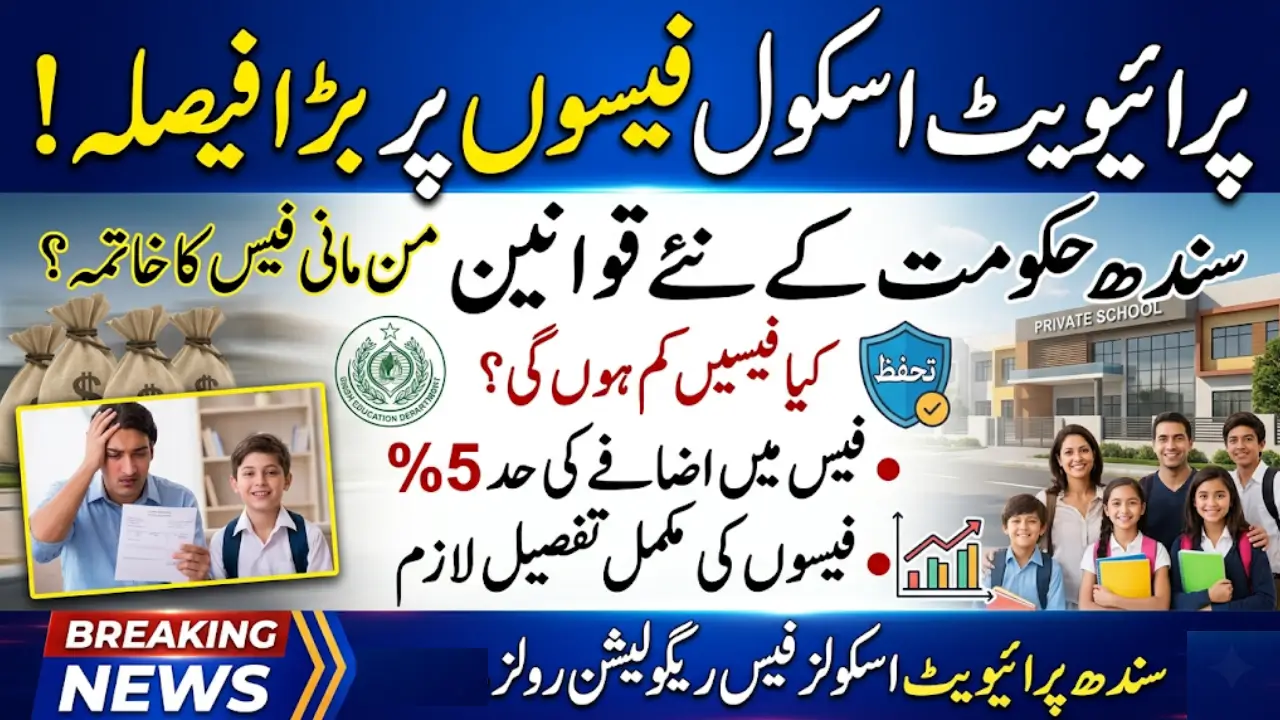
Sindh Governmenthas recently announced a set of new regulations aimed at regulating the collection of fees by private schools. This comes as a response to growing concerns over fee hikes, lack of transparency, and the financial burden placed on parents by some private educational institutions. These new rules are expected to bring much-needed clarity to the private education sector and ensure that parents are not exploited by unreasonable fee increases.
Understanding the New Fee Collection Rules
The Sindh government’s new rules are designed to make fee collection more transparent and fair. Under the new regulations, private schools must adhere to strict guidelines regarding how much they can charge for tuition and other fees. One of the most notable aspects of the rules is the cap on annual fee increases. Schools will no longer be allowed to increase fees arbitrarily. Any hike in fees must be justified, and the increase cannot exceed a certain percentage set by the government.
Additionally, private schools must now provide a detailed breakdown of their fee structure. This means that parents will have a clearer understanding of what they are paying for, whether it’s tuition, administrative costs, or extracurricular activities. The goal is to make sure there’s no ambiguity in the billing process, and parents will not be left wondering why certain charges are being added to their bills.
You Can Also Read : BISP New Registration Problem Solution
Why Are These Rules Being Implemented?
For many years, private schools in Sindh have been charging fees with little to no oversight. This has led to situations where schools increased their fees without offering any justification, often leaving parents with no recourse to challenge the charges. In many cases, the rising cost of education has placed a significant financial strain on families, especially those with multiple children in private schools.
The new rules are the Sindh government’s response to these issues. By introducing caps on fee increases, mandating transparency, and setting up a mechanism for dispute resolution, the government is seeking to restore trust between private schools and parents. The hope is that these regulations will create a fairer and more balanced educational environment for students, while also making education more affordable and accessible to a wider range of families.
Key Features of the New Rules
The new private school fee collection rules come with several important features that aim to protect parents and ensure that schools operate within reasonable financial boundaries. Here are some of the key aspects of the regulations:
- Fee Hike Cap: The most significant change is the introduction of a cap on annual fee increases. Schools are no longer allowed to increase their fees by more than 5% each year. This will help prevent schools from making large, unexpected increases that could financially burden families.
- Clear Fee Breakdown: Schools must provide a detailed, itemized breakdown of their fees. This means that parents will know exactly what they are paying for, whether it’s the basic tuition fee, extracurricular activities, transportation, or any other additional charges.
- Dispute Resolution: The government has set up a dedicated mechanism for parents to file complaints if they believe they have been overcharged or if there is a lack of transparency in fee collection. This gives parents an avenue for recourse and ensures that schools are held accountable for their billing practices.
- Annual Reporting: Private schools will now be required to submit an annual report to the Sindh Education Department, outlining their fee structures and any changes in fees. This allows the government to monitor and oversee the fees being charged by schools, ensuring that they comply with the new rules.
Impact on Parents and Students
For parents, these new rules bring a sense of relief. The clear fee structure and the cap on fee increases will make it easier for families to budget for their children’s education. Parents will also have more power to question any fees they deem unfair or unreasonable.
The dispute resolution system ensures that parents are not left powerless if they feel their concerns are not being addressed by the school. Additionally, the requirement for annual reports means that schools will be under greater scrutiny, which could lead to better practices and fewer arbitrary fee hikes in the future.
You Can Also Read : Benazir Income Support Programme Increases
For students, these changes could help make private education more accessible. With reduced financial stress on families, students will have a better chance of continuing their education without the worry of unexpected fee hikes. This could also lead to a more diverse student body, as families from different financial backgrounds might feel more confident about enrolling their children in private schools.
Potential Challenges for Private Schools
While the new regulations are beneficial for parents and students, they also present challenges for private schools. The cap on fee increases could make it more difficult for schools to maintain their operations, especially for institutions that rely heavily on tuition fees to cover their expenses. Some schools may struggle to manage their finances within these new restrictions, potentially leading to cuts in staff, infrastructure development, or extracurricular programs.
Moreover, the added administrative requirements, such as providing detailed fee breakdowns and submitting annual reports, could increase the workload for school administrators. Smaller schools, in particular, may find it difficult to comply with these new obligations, which could affect the quality of service they provide.
You Can Also Read : BISP Expand Kafalat Program Rs14,500
A Positive Step for Educational Reform
Despite these challenges, the new fee collection rules are a positive step for educational reform in Sindh. By ensuring that schools are transparent and accountable, the government is setting a precedent for a more fair and just education system. These rules help level the playing field, giving parents the ability to challenge unfair practices and protecting the rights of students.
The impact of these changes will likely be felt not only in Sindh but across Pakistan, as other provinces may adopt similar regulations. If successful, these rules could help transform the private education sector, making it more transparent, accountable, and accessible for all families.
Conclusion
The Sindh government’s new private school fee collection rules mark a significant milestone in the effort to regulate the education sector and ensure fairness for all. With clearer fee structures, a cap on fee increases, and a formal mechanism for dispute resolution, these rules are a much-needed step toward balancing the interests of private schools and parents.
While the changes may pose challenges for schools, they ultimately benefit students and families by creating a more transparent, accountable, and affordable education system. As the rules are implemented and enforced, they could pave the way for similar reforms in other regions, improving the quality of education across the country.