
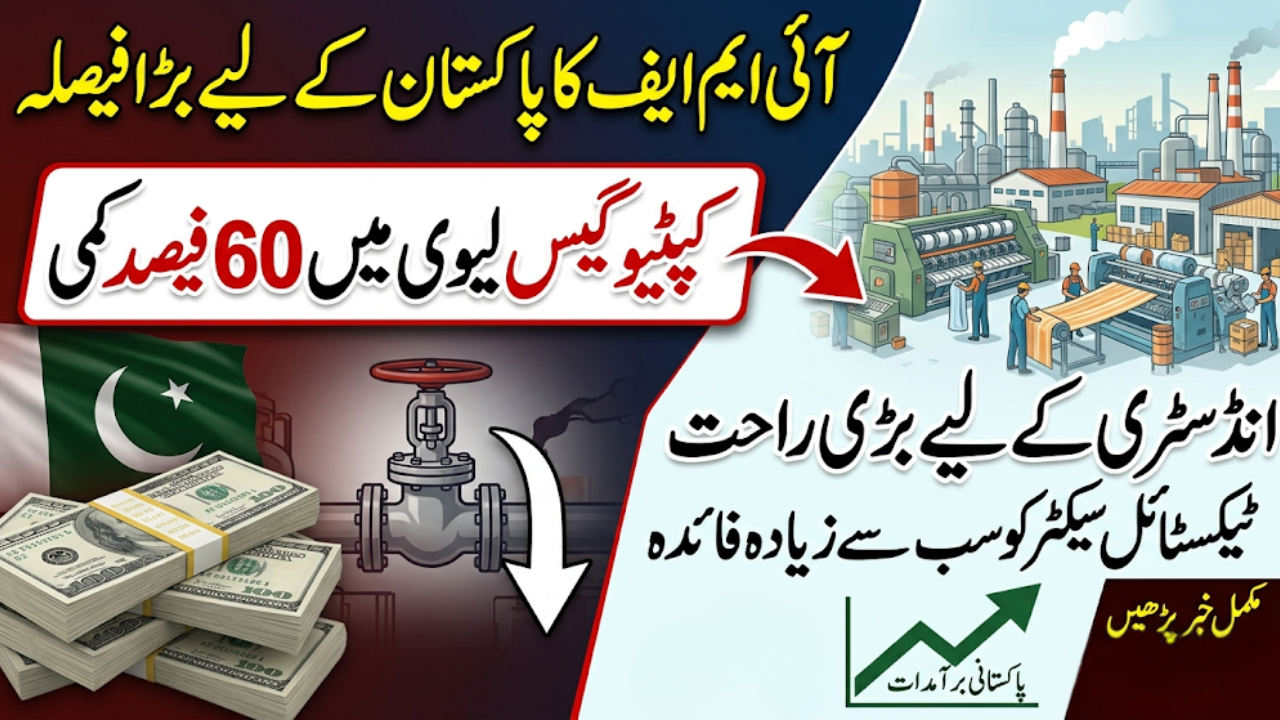
Relief for Pakistan’s Industrial Sector
Pakistan’s industrial sector has received a major boost after the International Monetary Fund IMF Approves 60% reduction in the captive gas levy. This move is expected to provide much-needed financial relief to industries that rely on captive power generation, especially the textile sector.
Rising energy costs had placed heavy pressure on manufacturers, making it difficult for them to remain competitive in international markets. With this reduction, industrial units may now experience lower operating expenses and improved production efficiency.
What Is the Captive Gas Levy?
The captive gas levy is a government-imposed charge on industries that use natural gas for their own electricity generation instead of relying on the national power grid. The levy was originally introduced to encourage industries to shift to grid electricity, but it significantly increased costs for businesses dependent on gas-based captive plants.
For many manufacturers, captive gas systems remain the most reliable source of uninterrupted power. The levy therefore created financial challenges by increasing utility bills and reducing profit margins, particularly for export-oriented industries.
پاکستان میں صنعتی شعبے کے لیے ایک بڑی پیش رفت سامنے آئی ہے جس کے تحت بین الاقوامی مالیاتی فنڈ نے کیپٹیو گیس پر عائد ہونے والے ٹیکس میں ساٹھ فیصد کمی کی منظوری دے دی ہے۔ اس فیصلے سے ان صنعتوں کو خاص طور پر ریلیف ملنے کی توقع ہے
جو اپنی بجلی خود گیس سے پیدا کرتی ہیں۔ توانائی کی بڑھتی ہوئی قیمتوں نے پہلے ہی کاروباری لاگت میں اضافہ کر رکھا تھا، جس سے برآمدی صنعتوں کو شدید دباؤ کا سامنا تھا۔ اس کمی کے بعد پیداواری اخراجات میں واضح کمی آنے اور صنعتی سرگرمیوں میں بہتری کی امید کی جا رہی ہے۔
IMF Decision Brings Major Cost Relief
The IMF’s approval to reduce the levy by 60% is being viewed as a practical step toward easing industrial pressure while maintaining energy sector reforms. The decision may help Pakistan balance economic reform goals with industrial sustainability.
Key benefits expected from this reduction include:
- Lower energy expenses for industrial manufacturers
- Better competitiveness for Pakistani exports
- Increased confidence among investors and exporters
These outcomes are especially important at a time when Pakistan is working to stabilize its economy and strengthen export performance.
You Can Also Read : 6 Pakistani Pilgrims Detained in Makkah
Positive Impact on Textile Exports
Pakistan’s textile industry, one of the country’s largest export sectors, is expected to benefit the most from the levy cut. Textile manufacturers had repeatedly argued that higher gas levies were increasing production costs and reducing export competitiveness.
With lower gas charges, exporters may be able to offer more competitive prices in global markets. This can improve order volumes, increase foreign exchange earnings, and strengthen Pakistan’s position in the international textile market.
یہ فیصلہ پاکستان کی معیشت کے لیے بھی مثبت تصور کیا جا رہا ہے کیونکہ اس سے برآمدات کو فروغ مل سکتا ہے اور صنعتی پیداوار میں اضافہ ممکن ہوگا۔ خاص طور پر ٹیکسٹائل جیسے بڑے شعبے کو اس اقدام سے فائدہ پہنچے گا، جو ملکی آمدنی اور روزگار میں اہم کردار ادا کرتا ہے۔
کاروباری طبقے کے مطابق اس ریلیف سے نہ صرف صنعتیں مستحکم ہوں گی بلکہ بیرونی منڈیوں میں مسابقت بھی بہتر ہو گی، جس سے مجموعی طور پر معیشت کو سہارا ملے گا۔
Support for Economic Stability
The levy reduction is not only beneficial for industries but also supports Pakistan’s wider economic recovery efforts. Lower production costs can encourage greater industrial activity, which contributes to employment generation, export growth, and economic expansion.
At a time when Pakistan is managing inflation and external financial pressures, policies that support industrial output are essential for maintaining economic momentum and investor trust.
You Can Also Read : FDE Introduces New Online Admission
Business Community Welcomes the Move
The business community has welcomed the IMF-backed reduction, calling it a timely measure for industrial survival. Manufacturers and exporters had long demanded a review of the levy, arguing that high energy charges were making operations unsustainable.
Industry leaders believe the reduction will provide breathing space to businesses and may encourage further investment in industrial production. It also signals that economic policymakers are taking industrial concerns seriously.
Future Outlook for Pakistan’s Industry
The 60% reduction in the captive gas levy offers a positive outlook for Pakistan’s industrial sector. By lowering energy costs, the country can help its manufacturers remain competitive while supporting economic recovery.
Although challenges remain, this decision marks an important step toward balancing fiscal reform with industrial growth. If managed effectively, the levy reduction could strengthen exports, restore business confidence, and contribute to long-term economic stability in Pakistan.