
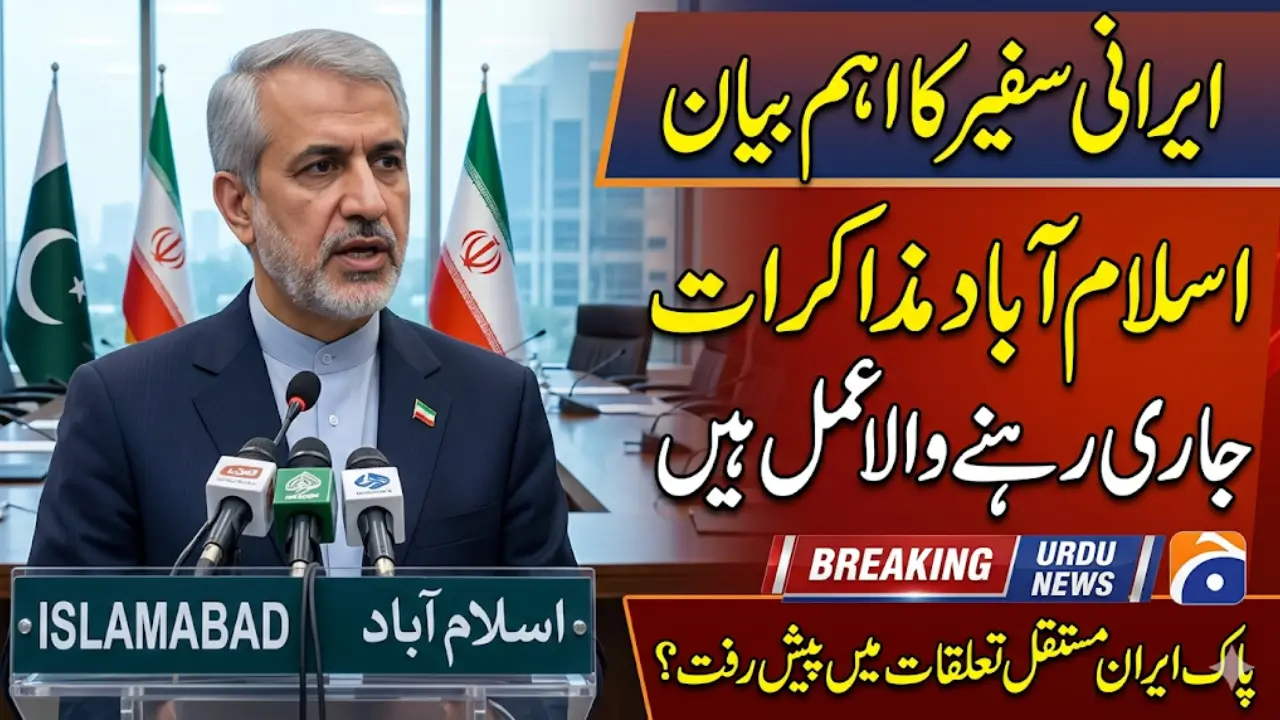
Islamabad Talks Continue Amid Regional Diplomacy
Diplomatic discussions between Islamabad and Tehran continue to remain active as both sides work toward strengthening long-term cooperation. The Iranian envoy recently emphasized that these talks should not be seen as one-time meetings but as part of an ongoing diplomatic process. This reflects a steady effort by both countries to maintain communication and improve mutual understanding.
In today’s shifting global environment, regional diplomacy has become more important than ever. Pakistan and Iran, sharing geographical proximity and historical ties, are focusing on building stable relations through continuous engagement. Even when formal announcements are limited, behind-the-scenes discussions are said to be ongoing.
اسلام آباد اور تہران کے درمیان سفارتی بات چیت مسلسل جاری ہے اور ایرانی سفیر کے مطابق یہ عمل کسی ایک ملاقات یا واقعے تک محدود نہیں بلکہ ایک مستقل اور جاری رہنے والا سلسلہ ہے۔ دونوں ممالک خطے میں استحکام، اعتماد سازی اور بہتر تعلقات کے لیے بات چیت کو اہمیت دے رہے ہیں۔ پاکستان اور ایران اپنے مشترکہ سرحدی خطے، سیکیورٹی معاملات اور معاشی تعاون پر توجہ دے رہے ہیں تاکہ تعلقات کو مزید مضبوط بنایا جا سکے۔ یہ بات چیت اس بات کی علامت ہے کہ دونوں ممالک فوری نتائج کے بجائے طویل المدتی حکمت عملی پر کام کر رہے ہیں۔
Iranian Envoy’s Statement on Ongoing Dialogue
The Iranian envoy’s recent remarks highlighted that dialogue with Pakistan is continuous and evolving. According to this view, diplomatic progress is not measured by single events but by consistent interaction over time. This approach helps both countries address sensitive issues in a more structured and patient manner.
Rather than expecting immediate breakthroughs, both sides appear to be working on gradual progress. This includes building trust, improving communication channels, and identifying shared priorities. The statement also reflects Iran’s broader diplomatic strategy of maintaining steady regional engagement, especially with neighboring countries.
You Can Also Read : EOBI Releases Latest Financial Report
Importance of Iran-Pakistan Relations Now
Relations between Iran and Pakistan have gained renewed importance due to changing regional conditions. Security challenges, economic pressures, and energy needs have pushed both countries to strengthen cooperation. Their shared border makes coordination essential for stability and development in border regions.
At the same time, global economic shifts have increased the need for regional partnerships. Both countries are exploring ways to improve trade flow, enhance connectivity, and support economic growth. This makes ongoing dialogue not just important but necessary for long-term regional balance.
اس مسلسل رابطے کا مقصد نہ صرف دو طرفہ تعلقات کو بہتر بنانا ہے بلکہ خطے میں امن اور ترقی کے امکانات کو بھی بڑھانا ہے۔ اگرچہ کچھ چیلنجز موجود ہیں جیسے سیاسی حالات اور معاشی مسائل، لیکن دونوں ممالک بات چیت کے ذریعے ان مسائل کو حل کرنے کی کوشش کر رہے ہیں۔ سرحدی سیکیورٹی، تجارت اور توانائی کے منصوبے بھی اس مذاکراتی عمل کا اہم حصہ ہیں۔ مجموعی طور پر یہ سفارتی عمل اس بات کی طرف اشارہ کرتا ہے کہ دونوں ممالک اپنے تعلقات کو ایک مستحکم اور مثبت سمت میں لے جانا چاہتے ہیں۔
Key Highlights from the Ongoing Talks
The ongoing diplomatic discussions focus on several important areas that shape the future of bilateral relations. These highlights help explain why continuous engagement is essential for both sides:
- Dialogue between the two countries is ongoing and part of a long-term process
- Both sides prefer gradual progress rather than sudden political shifts
- Economic cooperation and regional stability remain central priorities
- Security concerns along the shared border are being regularly discussed
These points show that the relationship is being developed step by step, with both governments prioritizing stability and mutual benefit over quick results.
Trade and Security Cooperation Focus
One of the main areas of discussion between Islamabad and Tehran is trade expansion. Both countries are interested in increasing bilateral trade and improving transport routes to make economic exchange easier. Better connectivity could help local businesses and improve regional economic activity.
Security cooperation is another key focus. The long border shared by both countries requires coordination to manage cross-border movement and prevent illegal activities. Joint efforts in this area are seen as essential for maintaining peace and stability in border regions. These discussions also aim to build stronger trust between security institutions on both sides.
You Can Also Read : Pakistan Opens New Trade Corridor
Challenges in the Diplomatic Process
Despite positive engagement, several challenges continue to affect the pace of progress. Regional political dynamics, international pressures, and economic limitations can slow down decision-making. Both countries also face internal priorities that influence how quickly agreements can be implemented.
Another challenge is turning diplomatic understanding into practical results. Even when agreements are reached at the discussion level, execution requires coordination across multiple departments and institutions. This process can take time, patience, and sustained political will from both sides.
Future of Islamabad Talks
Looking ahead, the future of Islamabad-Tehran talks is expected to remain steady and ongoing. Instead of dramatic announcements or sudden changes, gradual development is more likely. Both sides seem committed to maintaining communication and working through issues in a structured manner.
The Iranian envoy’s statement reinforces the idea that diplomacy is a continuous journey rather than a fixed destination. As regional conditions evolve, ongoing engagement between Islamabad and Tehran will likely continue to play an important role in promoting stability, cooperation, and mutual understanding.
Conclusion
The statement that Islamabad talks are an ongoing process reflects a realistic and steady approach to diplomacy between Iran and Pakistan. Both countries appear focused on long-term cooperation in trade, security, and regional stability rather than short-term outcomes.
While challenges remain, continued dialogue shows commitment from both sides to strengthen their relationship. Over time, this consistent engagement may help build a more stable and cooperative regional environment based on trust and shared interests.